An Outline History of Stanford in the Vale
|
 |
|
|
|
|
|
| |
|
|
|
|
|
|
| |
|
|
|
|
|
|
Civil War Stanford
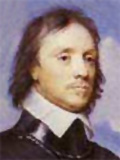 When the political tensions in English society eventually resulted in Civil War, Stanford found itself on the frontier between warring forces. After his repulse at the battle of Edgehill in 1642, Charles I set up his headquarters in Oxford. As part of the outer defences of that city, garrisons were established at Faringdon, Abingdon and Wallingford. It has been assumed that the Faringdon Garrison established a picquet post in Stanford to cover the crossings of the Frogmore and the Ock.
In the early days of the war, Stanford would have seen the comings and goings of the Royalist forces and their leaders; King Charles passed through Faringdon and Wantage on 17-18 September 1643, en route from the siege of Gloucester to the first battle of Newbury on 20 September, but the inhabitants of the parish would probably have been more preoccupied with protecting their food and property from marauding soldiers and military requisitions from both sides.
In 1644, the Parliamentary forces captured Abingdon, and Faringdon increased in strategic importance, so much so that Faringdon House was fortified under Col. George Lisle. In 1645, Oliver Cromwell led a force of cavalry across Islip Bridge, and then passed by the way of Witney, Bampton and Radcot Bridge to Faringdon. When joined by infantry from Abingdon, Cromwell tried to take Faringdon House on 29 April. A raid by Lord Gording to relieve Faringdon resulted in skirmishes at Radcot and Newbridge, and Cromwell withdrew his forces. Col. Marmaduke Rawdon succeeded Col. Lisle in charge of the Faringdon garrison, arriving about 7 May.
Where Cromwell stayed during this period is not known for certain, although village legend states that he stayed in Stanford at Cromwell House (until recently known as Penstone's Farm). However, it should be noted that Cromwell House was only constructed in the 17th C, and has been extensively remodelled and renovated in the following centuries.
Faringdon was never taken by assault by Parliament, although, under Col. Sir Robert Pye, they attempted to do so in 1646, but surrendered with full military honours of war on 24 June upon the capitulation of Oxford. Six casualties of the Civil War, mainly from Sir Thomas Aston's (royalist) regiment, are buried in St. Denys' churchyard. The parish registers give evidence of epidemic disease during 1643-46, perhaps due to typhus fever or plague; later, the parish registers bear witness to changing fashions in the naming of children, with names from the New Testament and early saints giving way to names from the Old Testament.
|
